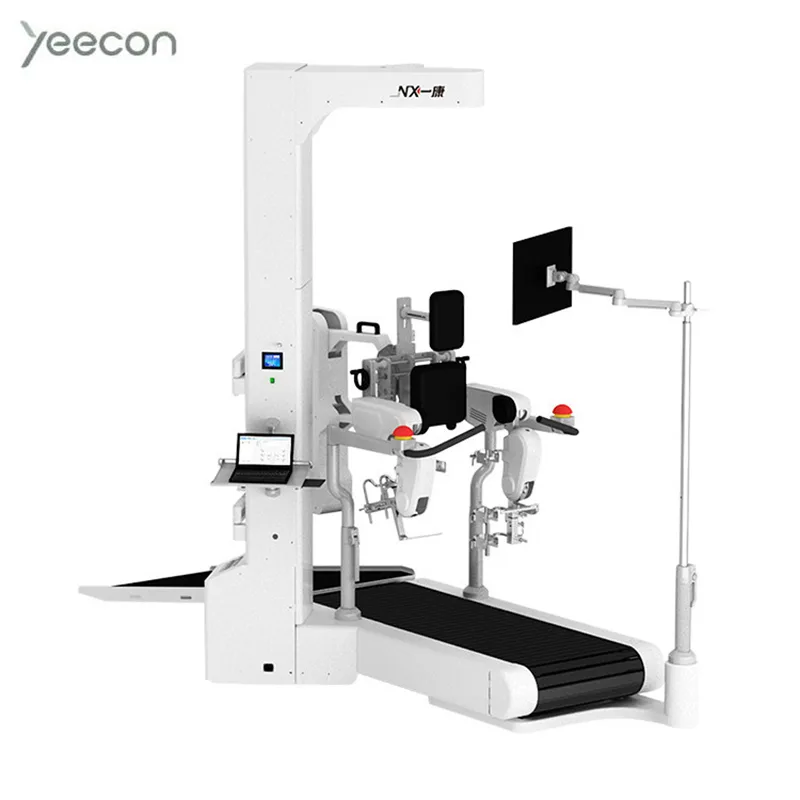
Medical exoskeleton for walking and robotic gait trainer
We supply medical exoskeletons and robotic gait trainers for neurorehabilitation clinics, hospitals and rehabilitation centres. Motorised hip and knee joints guide the patient through the movement of normal walking, while the support system takes part of the body weight.
The range includes treadmill gait robots, exoskeletons for upright walking and sets of mechanical legs for adults and children. Gait analysis and interactive scenarios show the patient's progress at every session.
What happens in practice
Manual gait training needs two or three therapists per patient and limits the number of steps per session. A gait robot repeats the correct movement hundreds of times in a session, with constant guidance.
The second issue is assessment. Without data on joint range and patient participation, progress is judged by observation. Robots with gait analysis record this data at every session.
What we do
We ask which patients you treat, adults or children, the session volume you plan and the space you have. From that we propose a treadmill gait robot, an exoskeleton for upright walking or a system with interchangeable mechanical legs.
Delivery, installation and team training are included. We take the service requests and order parts from the manufacturer.
How to choose an exoskeleton or a gait robot
Treadmill gait robot
The A3-M and A3-2 guide the patient on a treadmill synchronised with the gait orthosis. The A3-M uses servo motors that control the range of each joint, and the treadmill starts at 0.1 km/h. The A3-2 is driven by seven motors and serves patients up to 200 cm tall.
Gait trainer with body weight support
The ZEPU-AI1 combines five-axis movement with dynamic body weight support and three training modes: passive, assisted and active. The ZEPU-AI1 Pro version has three screens for the interactive scenarios and a set of orthoses included.
Medical exoskeleton for upright walking
The ZEPU-AI9 exoskeleton guides the patient through the movements of normal walking in an upright position, with motorised hip and knee joints, gait analysis and spasm quantification.
Mechanical legs for adults and children
The additional set of mechanical legs for the ZEPU-AI1 and ZEPU-AI1 Pro is ordered in an adult or child size. With it, a clinic treats both adults and children on the same robot.
Exoskeletons and gait robots: models we supply
The models in the portfolio that cover this direction.
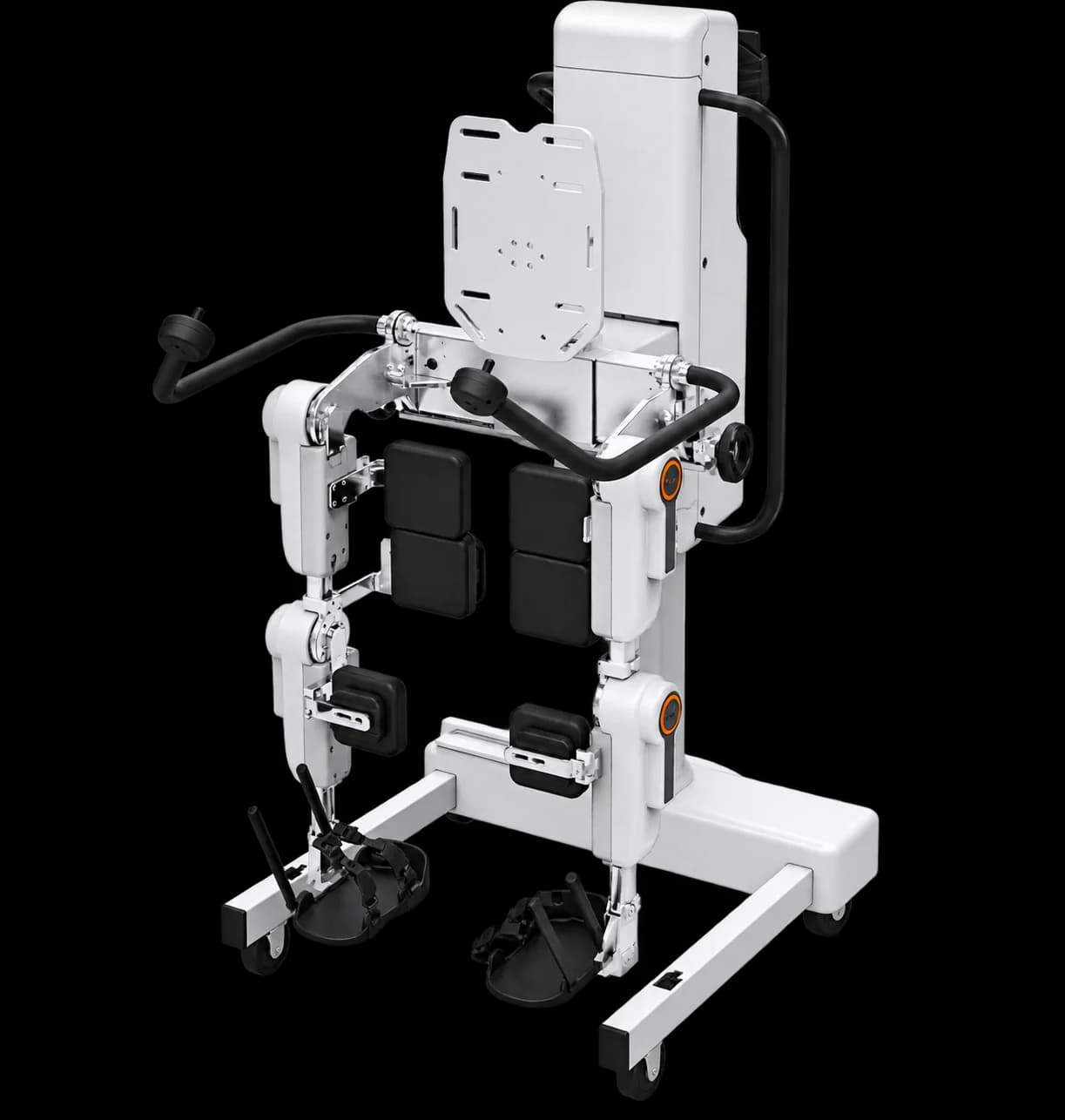
Lower Limb Exoskeleton Rehabilitation Robot ZEPU-AI9
Exoskeleton robot for upright gait rehabilitation. Motorised hip and knee joints guide the patient through the movements of a normal walk, with gait analysis, spasm quantification and a situational interaction mode.
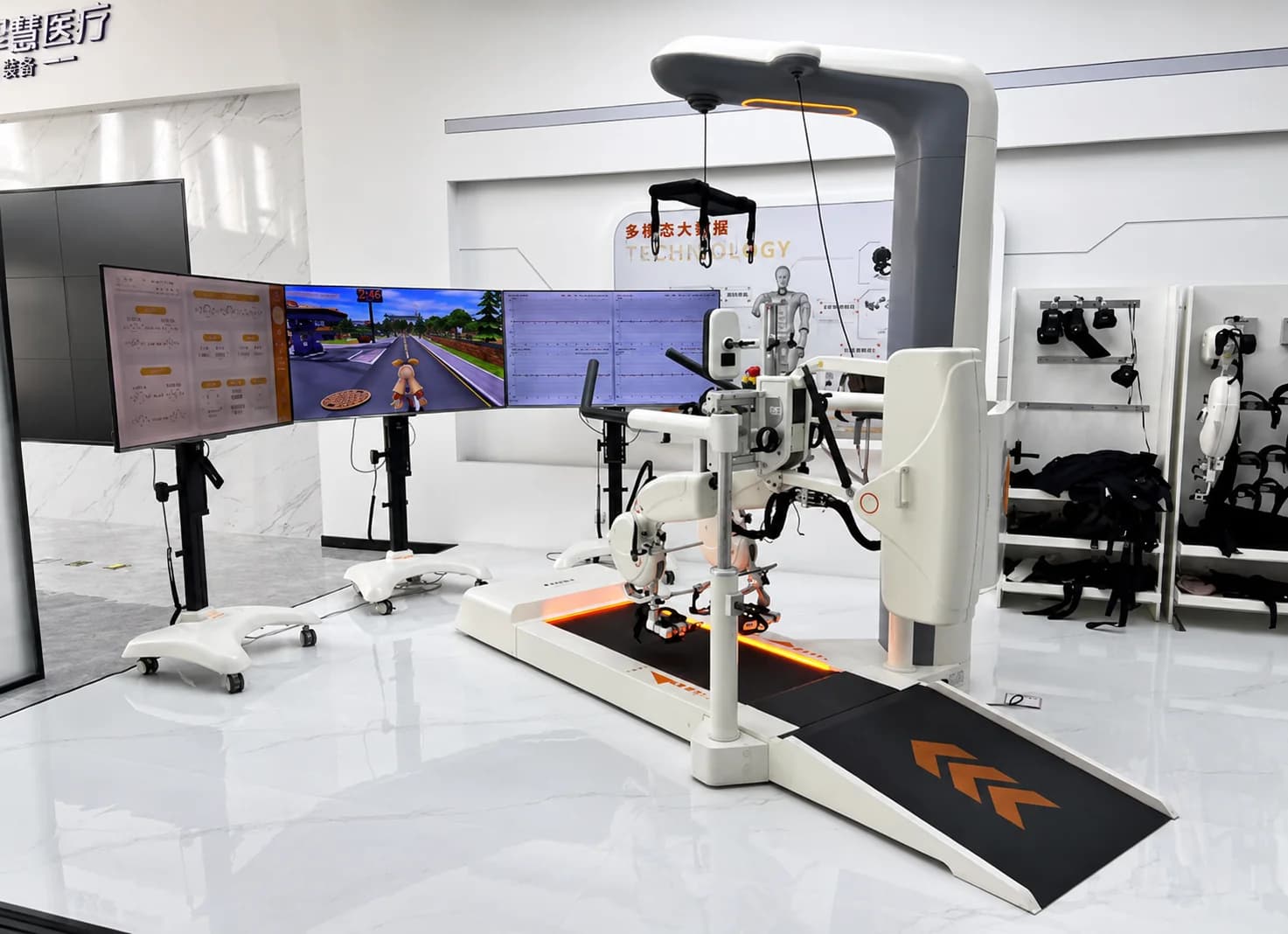
Gait Training and Evaluation Robot ZEPU-AI1 Pro
The ZEPU-AI1 Pro version of the exoskeleton gait trainer, supplied with one set of orthoses and three screens. It keeps the five-axis motion, dynamic body-weight support and the passive, assisted and active modes, while the interactive scenarios run on three adjacent displays.
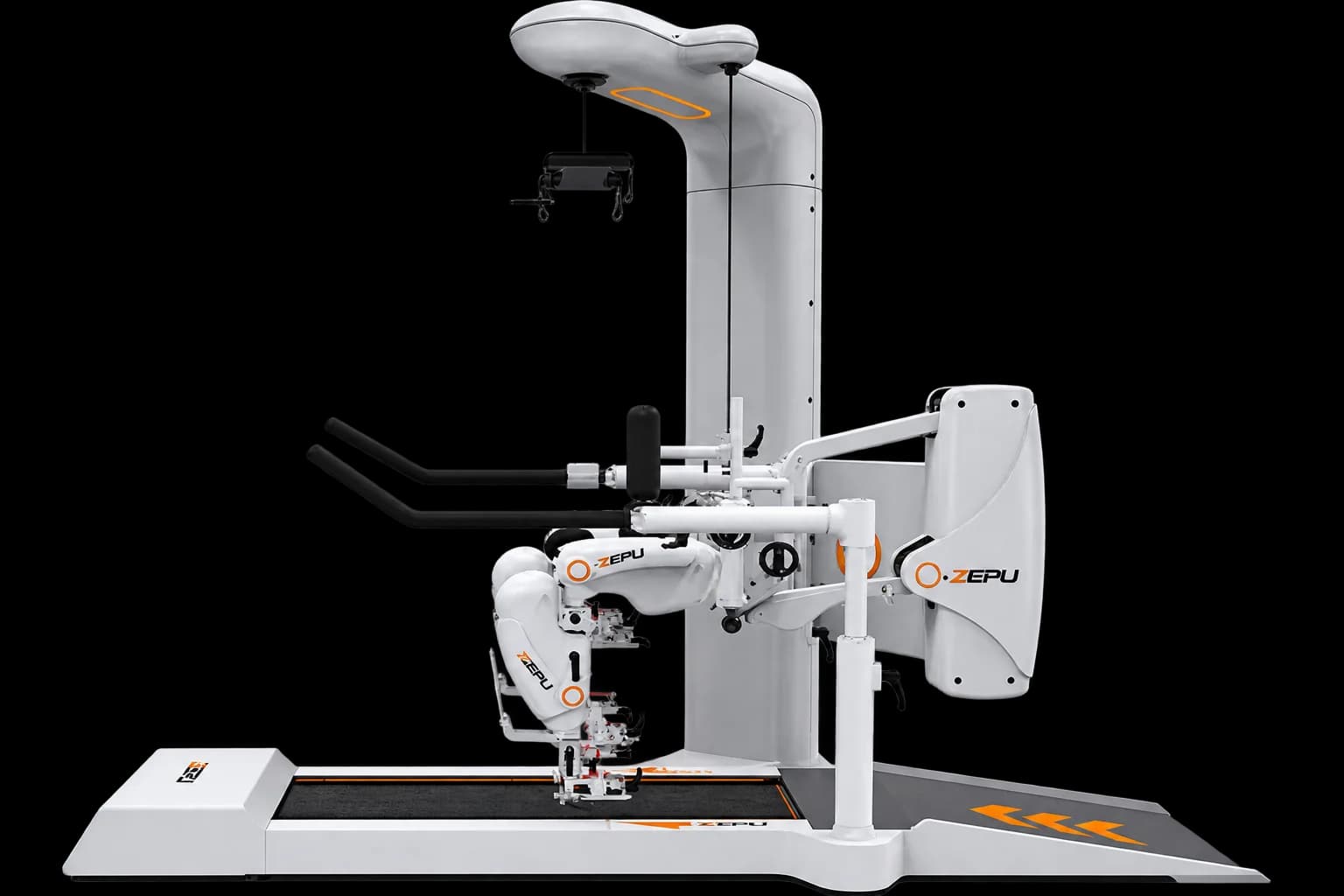
Gait Training and Evaluation Robot ZEPU-AI1
Robotic gait trainer with five-axis linkage technology, dynamic body-weight support and three training modes: passive, assisted and active. Guidance is adjusted in real time and interactive training uses virtual reality scenarios. Also available in a paediatric version.
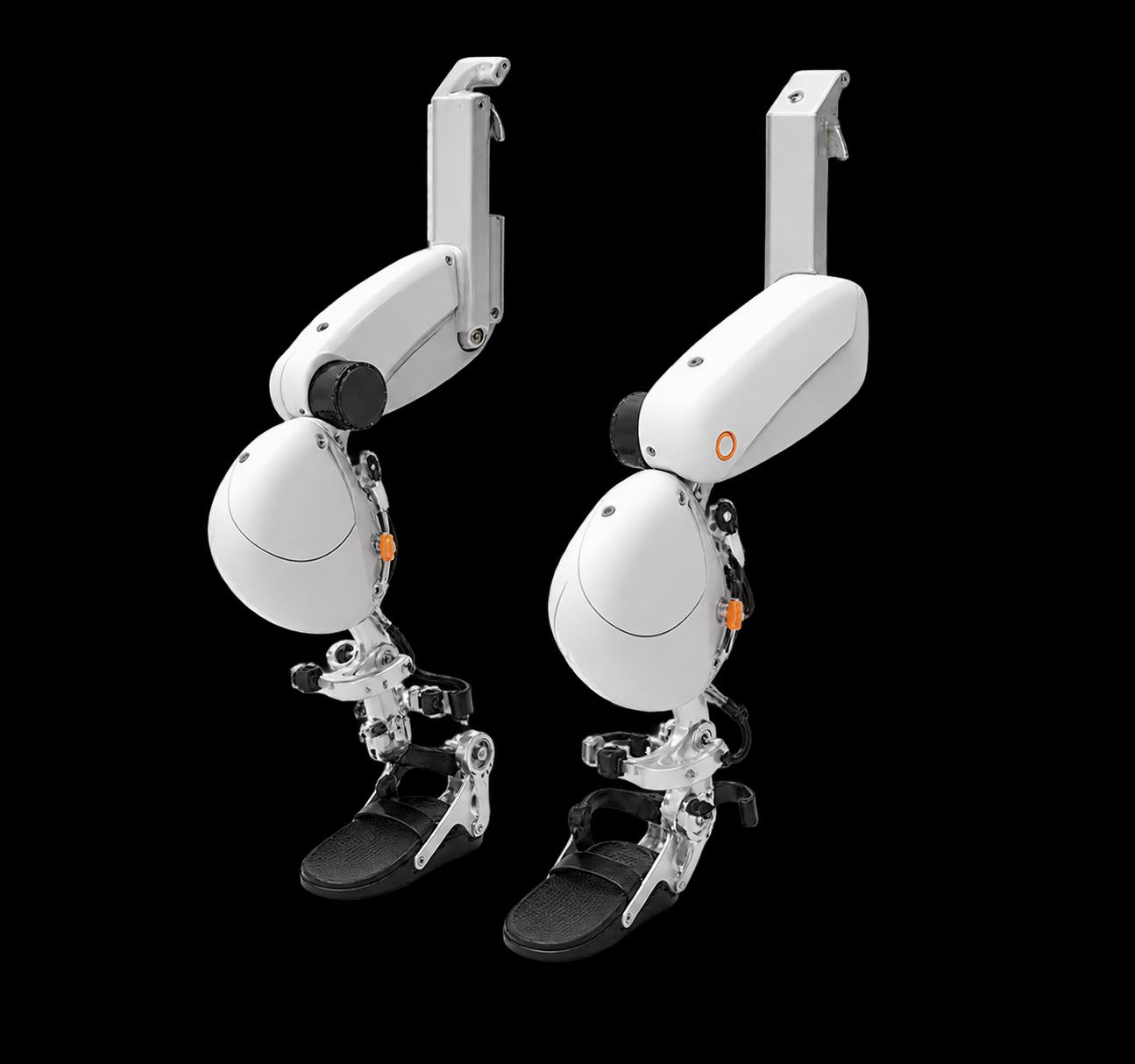
Additional Exoskeleton ZEPU-AI1, Adult or Paediatric Mechanical Legs
Additional set of mechanical legs, the motorised exoskeleton of the ZEPU-AI1 and ZEPU-AI1 Pro gait trainers. Supplied in an adult or a paediatric version, it lets a clinic treat patients of different sizes on the same robot.
Gait Training and Evaluation System A3-M
Gait robot with Panasonic servo motors that precisely control each joint's range of motion and walking speed. The treadmill starts from 0.1 km/h and is automatically synchronised with the gait corrector.
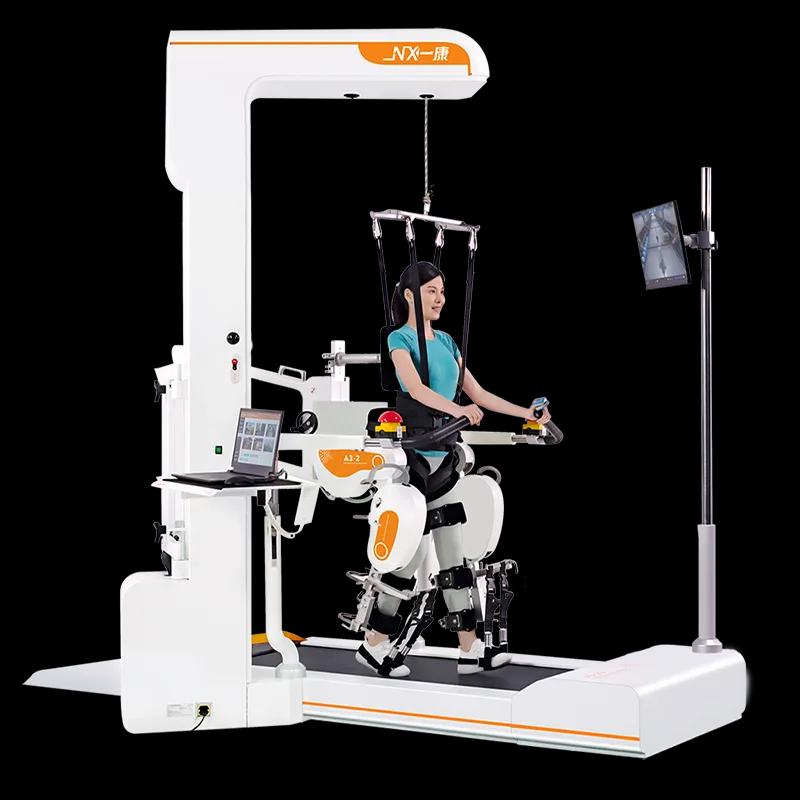
Gait Training and Evaluation System A3-2
Gait robot driven by seven motors, with a PVC polymer belt withstanding over 5000 kg and a 200 W exoskeleton motor. The support column is 268 cm tall and serves patients up to 200 cm.
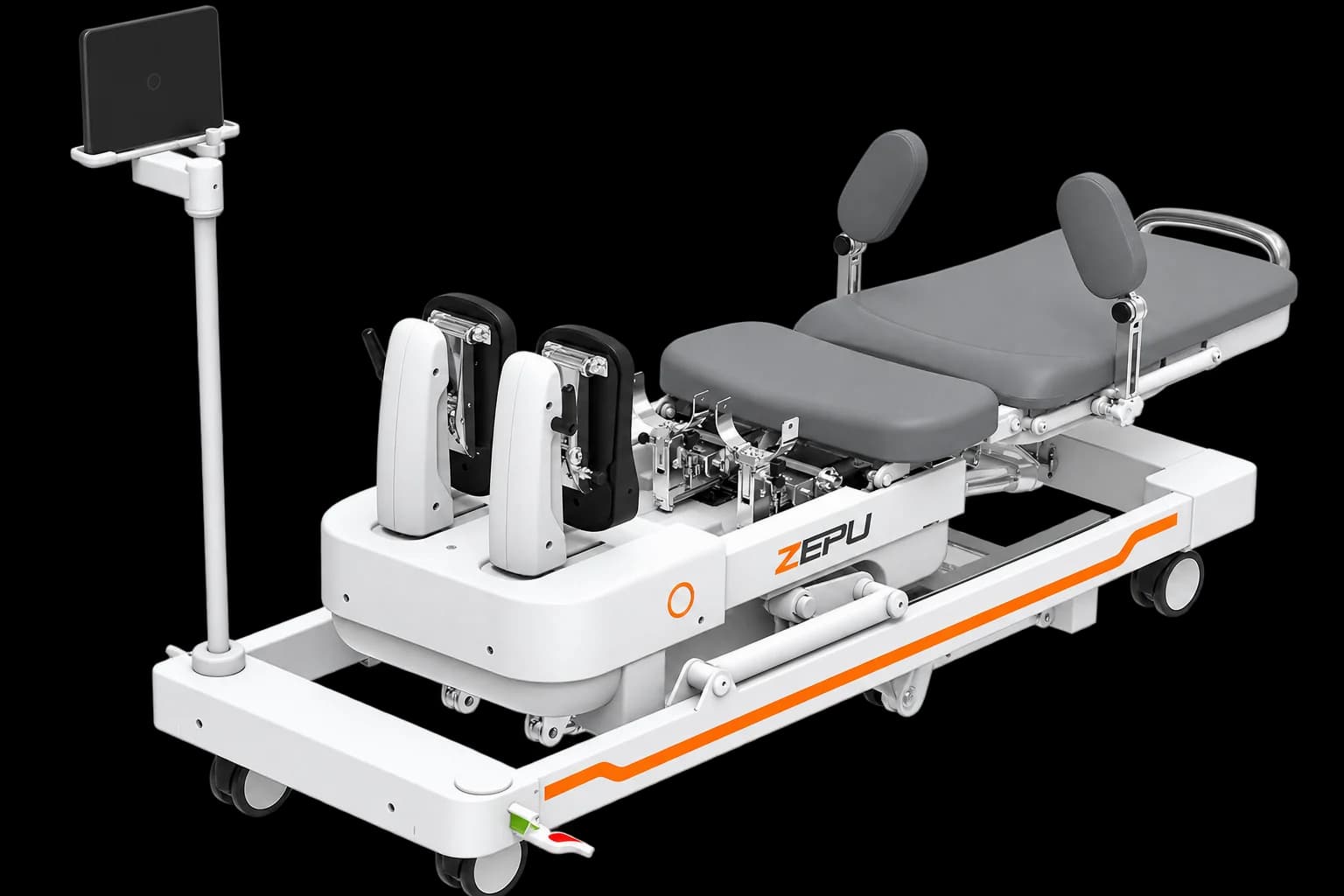
Lower Limb Feedback Training and Evaluation System ZEPU-AI3
Lower limb rehabilitation system with intelligent learning, allowing gait training in a lying, sitting or standing position. Includes panoramic sound for sessions with entertainment content. Also available in a paediatric version.
Exoskeletons and gait robots: frequently asked questions
What is a medical exoskeleton?
A medical exoskeleton is a device with motorised hip and knee joints that guides the patient's legs through the walking movement. It is used in rehabilitation after stroke, after spinal cord injury and in other neurological conditions.
What is the difference between a gait robot and an exoskeleton?
A gait robot works on a treadmill with a body weight support system. An exoskeleton for upright walking supports the patient standing and guides their steps without a treadmill.
Can gait robots be used for children?
Yes. For the ZEPU-AI1 and ZEPU-AI1 Pro we supply a set of mechanical legs in a child size, so the clinic treats adults and children on the same robot.
How much space does a gait robot need?
The space depends on the model and on the body weight support system. We give you the dimensions and the required room height before the quote.
See also
- Tilt table and standing frame for adults and childrenElectric and robotic tilt tables for adults and children
- Physiotherapy and medical rehabilitation equipmentComplete equipment for physiotherapy practices and rehabilitation centres
- Active-passive arm and leg exerciser for rehabilitationActive-passive arm and leg exercisers for rehabilitation