Updated: October 21, 2026
A guide for clinics, hospitals and rehabilitation centres: how hyperbaric chamber therapy works, recognised indications, protocols, contraindications and the criteria for choosing equipment.
In short
- The patient breathes near-pure oxygen in a chamber pressurised above atmospheric pressure. More oxygen dissolves in plasma and reaches poorly perfused tissue.
- For clinical use, the UHMS requires at least 1.4 ATA. Medical sessions usually run between 2 and 3 ATA.
- Recognised indications include carbon monoxide poisoning, decompression sickness, chronic wounds such as the diabetic foot and late radiation injury.
- The absolute contraindication is untreated pneumothorax. The indication and dosing are set by a doctor.
- The choice between monoplace and multiplace depends on patients per day, space and staff.
What is hyperbaric oxygen therapy
Hyperbaric oxygen therapy (HBOT) is a treatment in which the patient breathes close to 100% oxygen in a closed chamber pressurised above sea level pressure. The UHMS (Undersea and Hyperbaric Medical Society) definition requires, for clinical use, a pressure of at least 1.4 ATA. ATA means atmospheres absolute: 1 ATA is normal sea level pressure.
Under pressure, more oxygen dissolves in plasma, following Henry's law. Breathing air at normal pressure, plasma carries about 0.3 ml of oxygen per 100 ml of blood. Breathing pure oxygen at 3 ATA, it reaches about 6 ml, oxygen that also reaches poorly perfused tissue.
Soft inflatable chambers used in wellness work at around 1.3 ATA, below the 1.4 ATA clinical threshold. Rigid steel chambers reach the pressures of medical protocols.
What a hyperbaric chamber treats: recognised indications
The UHMS publishes the list of indications for which hyperbaric oxygen therapy has clinical evidence. It includes:
- Carbon monoxide poisoning.
- Decompression sickness and gas embolism.
- Problem wounds such as the diabetic foot, under specific conditions.
- Late radiation injury to soft tissue and bone.
- Compromised grafts and flaps.
- Necrotising soft tissue infections and gas gangrene.
- Refractory osteomyelitis.
- Crush injuries and acute traumatic ischaemia.
- Acute thermal burns.
- Sudden sensorineural hearing loss and central retinal artery occlusion.
- Severe anaemia and intracranial abscess.
Wellness centres and athletes also use hyperbaric chambers for recovery after exercise. These uses are not on the UHMS list, and the protocol is set by the centre's supervising doctor.
How a session runs and how many are needed
- Compression: pressure rises gradually and the patient equalises the ears, as during an aircraft descent.
- Treatment: the patient breathes oxygen through a mask or hood, with short air breaks, at the protocol pressure.
- Decompression: pressure drops gradually back to normal.
A session usually lasts 60 to 120 minutes including compression and decompression. The number of sessions depends on the indication: acute poisoning is treated in one to three sessions, while chronic wounds usually need 20 to 40 sessions, daily, Monday to Friday.
Do you run a salon, clinic or rehabilitation centre?
Tell us which treatments you want to offer and how many clients you see a day. We come back with the right model, the full price and what the delivery includes.
Contraindications and side effects
Contraindications
- Absolute: untreated pneumothorax.
- Some chemotherapy drugs (bleomycin, cisplatin, doxorubicin) and disulfiram, after a doctor's assessment.
- Acute upper respiratory infections and sinusitis, which prevent pressure equalisation.
- Obstructive lung disease with carbon dioxide retention.
- Uncontrolled epilepsy and high fever.
- Claustrophobia, in monoplace chambers.
- Pregnancy, except in emergencies, after a doctor's assessment.
Side effects
- Middle ear barotrauma, the most common effect, prevented by equalising.
- Sinus pressure.
- Temporary short-sightedness after long courses, which resolves within weeks.
- Rarely: oxygen toxicity seizures at high pressure.
The indication, pressure and number of sessions are set by a doctor. The equipment supplier delivers the chamber, the documentation and the operator training.
Monoplace or multiplace hyperbaric chamber
| Monoplace | Multiplace | |
|---|---|---|
| Patients per session | One | Two or more, by configuration |
| Oxygen delivery | By mask in an air-pressurised chamber, or through the chamber atmosphere, by model | By mask or hood, with the chamber pressurised with air |
| Attendant inside | Usually not | Possible, for patients who need assistance |
| Space needed | Small | Larger, with access for staff |
| Suited to | Clinics with individual appointments | Hospitals and centres with many patients a day |
In air-pressurised chambers the cabin atmosphere stays close to normal air and pure oxygen reaches only the patient, through the mask. The chambers in our range keep cabin oxygen at 22 to 24% and work at 2 to 3.5 ATA, according to the manufacturer's specifications.
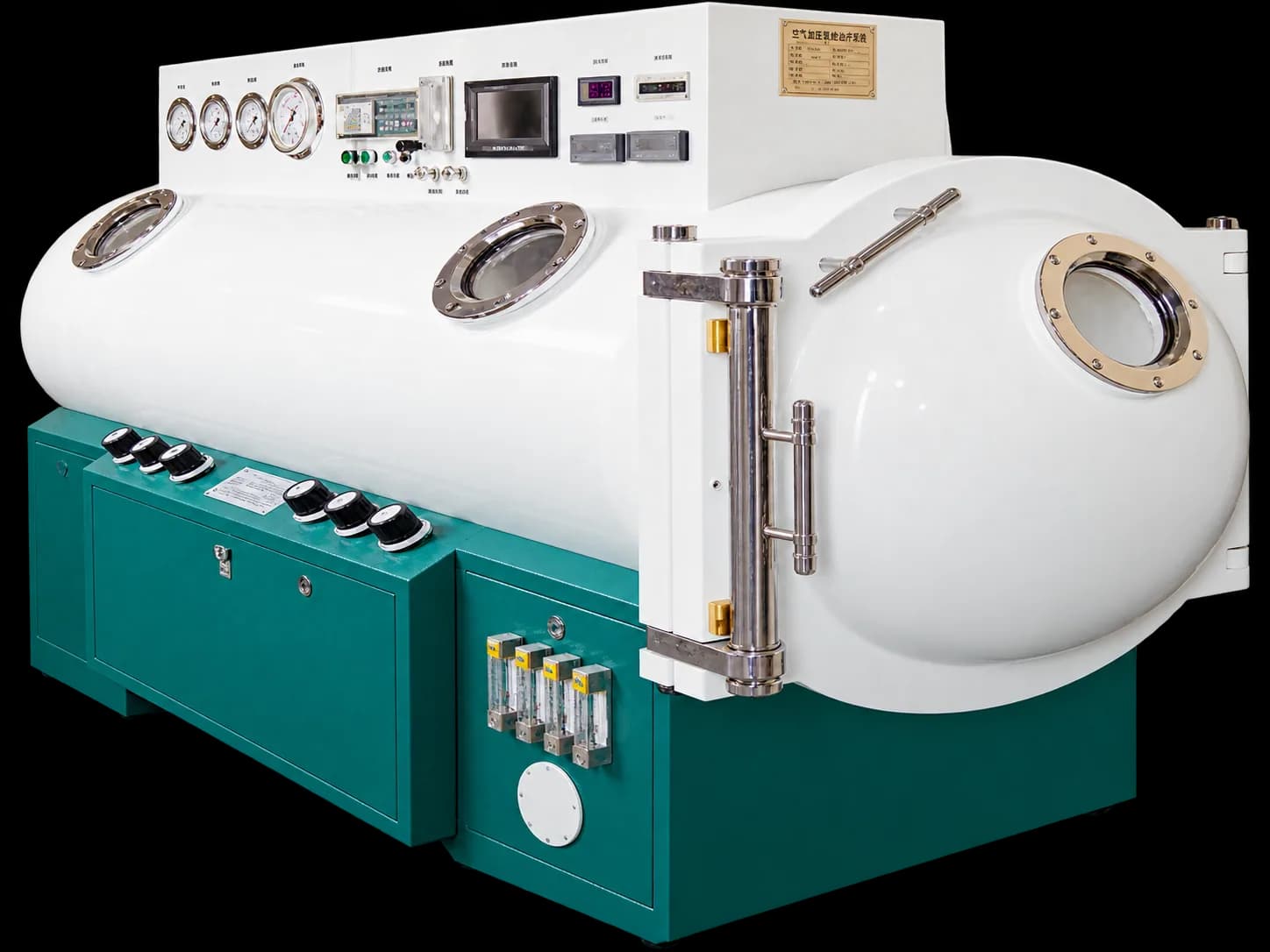
Monoplace hyperbaric chamber for a single patient, from the manufacturer's Classic cylinder line. Steel body, air pressurisation, working pressure of 0.1 to 0.25 MPa (2 to 3.5 ATA), for individual hyperbaric therapy sessions.
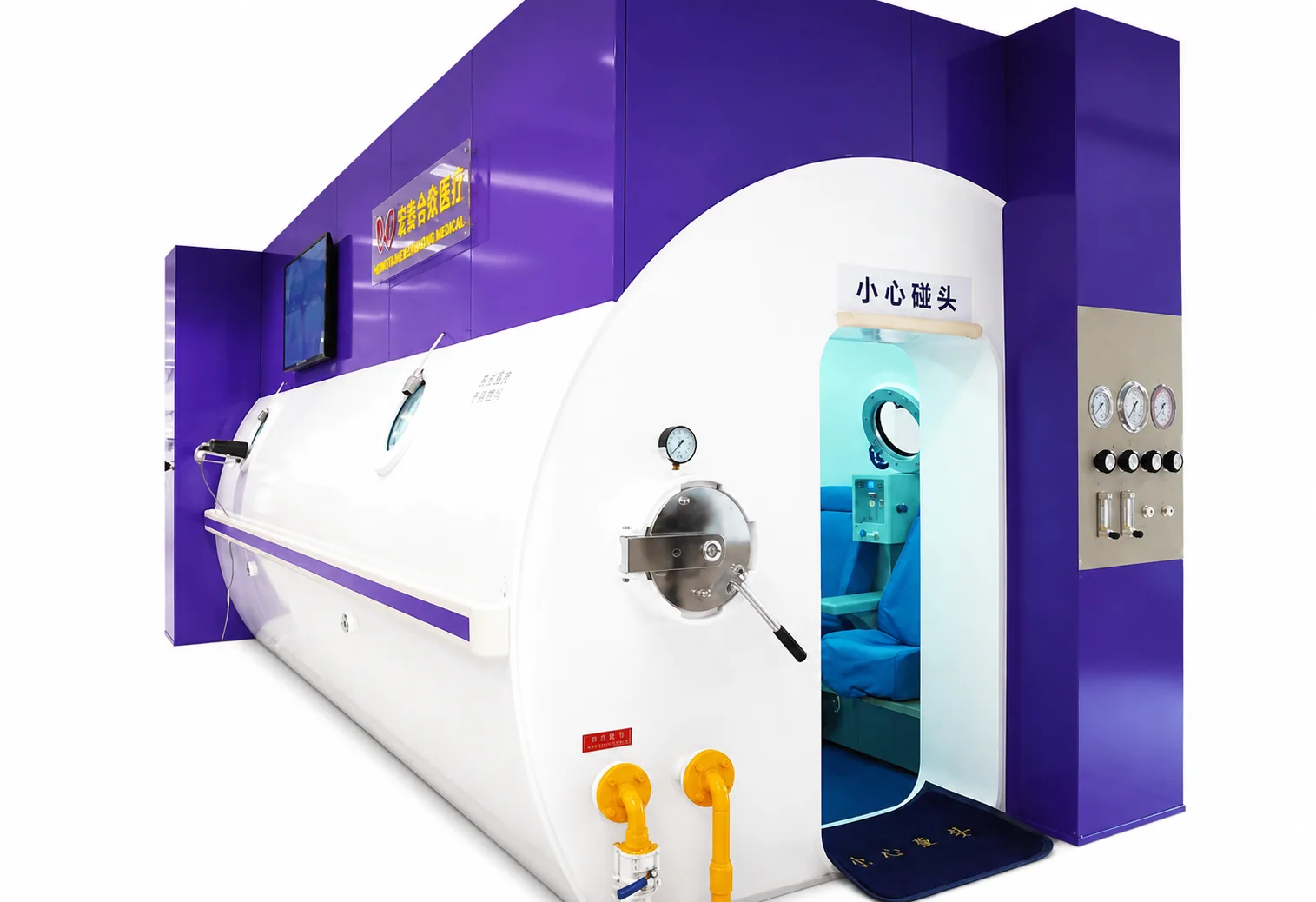
Flat-bottomed hyperbaric chamber with 2 cabins and a steel body, in a cuboid shape. Air pressurisation, working pressure of 0.1 to 0.25 MPa (2 to 3.5 ATA) and customisable capacity, according to the manufacturer's specifications.
What to look for when choosing a hyperbaric chamber
- Working pressure, matched to the medical protocols you will run.
- Number of seats, from patients per day and session length.
- Shape: the flat-bottomed model has a level floor and easy access, the cylinder is the classic pressure vessel form.
- Oxygen source and compressor air quality.
- Safety systems: cabin oxygen monitoring, patient communication, emergency decompression.
- Space, floor loading and power supply.
- Pressure equipment approval under your national rules, CE documentation, operator training and service.
Every configuration, from the single-patient chamber to flat-bottomed and cylinder chambers with several cabins, is on the hyperbaric chambers for sale page.
Running a hyperbaric oxygen therapy centre
A centre's capacity comes from the number of seats and the number of sessions per day. A multiplace chamber treats several patients in one session with a single operator, while a monoplace chamber allows individual appointments with different protocols.
Centres that also treat rehabilitation patients add physiotherapy equipment and TECAR therapy next to the chamber.
The Zeqira quote lists the chamber, delivery, installation, commissioning, documentation and operator training. We tell you the space, power and oxygen source you need before you order.
Do you run a salon, clinic or rehabilitation centre?
Tell us which treatments you want to offer and how many clients you see a day. We come back with the right model, the full price and what the delivery includes.
Frequently asked questions
What is hyperbaric oxygen therapy?
It is a treatment in which the patient breathes near-pure oxygen in a chamber pressurised above atmospheric pressure, usually between 2 and 3 ATA. More oxygen dissolves in plasma and reaches poorly perfused tissue.
What does hyperbaric oxygen therapy treat?
The UHMS list includes carbon monoxide poisoning, decompression sickness, gas embolism, chronic wounds such as the diabetic foot, late radiation injury, compromised grafts, necrotising infections, refractory osteomyelitis, burns and sudden hearing loss.
How long does it take for hyperbaric oxygen to work?
In acute poisoning the effect is immediate and one to three sessions are usual. For chronic wounds, courses usually run 20 to 40 sessions over several weeks.
How long is a hyperbaric oxygen session?
Usually 60 to 120 minutes, including compression and decompression.
Who should not have hyperbaric oxygen therapy?
The absolute contraindication is untreated pneumothorax. Relative ones include some chemotherapy drugs, upper respiratory infections, lung disease with carbon dioxide retention, uncontrolled epilepsy, high fever and claustrophobia.
Why is hyperbaric oxygen therapy expensive?
The chamber is a pressure vessel with compressors, oxygen supply and safety systems, and each session takes one to two hours of chamber and operator time. Running costs depend on the number of seats per session.
How much does a hyperbaric chamber cost?
The price depends on the type, number of seats, working pressure and auxiliary equipment: compressor and oxygen source. We send the full price with delivery and installation included.
Get a quote for the right machine
The quote covers the machine, delivery, installation, protocol training and the consumable cost per session. We work with companies, salons, clinics and hospitals.