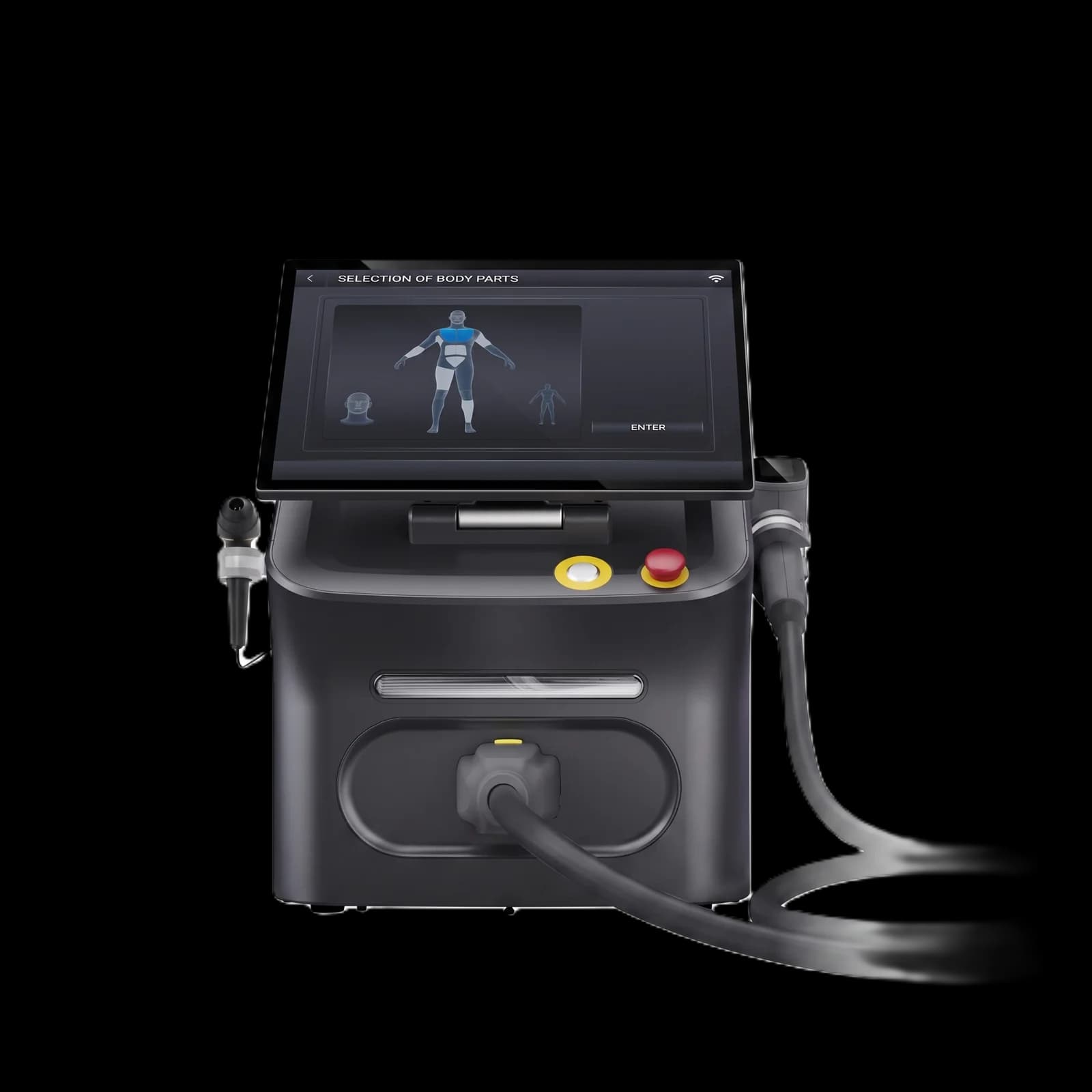
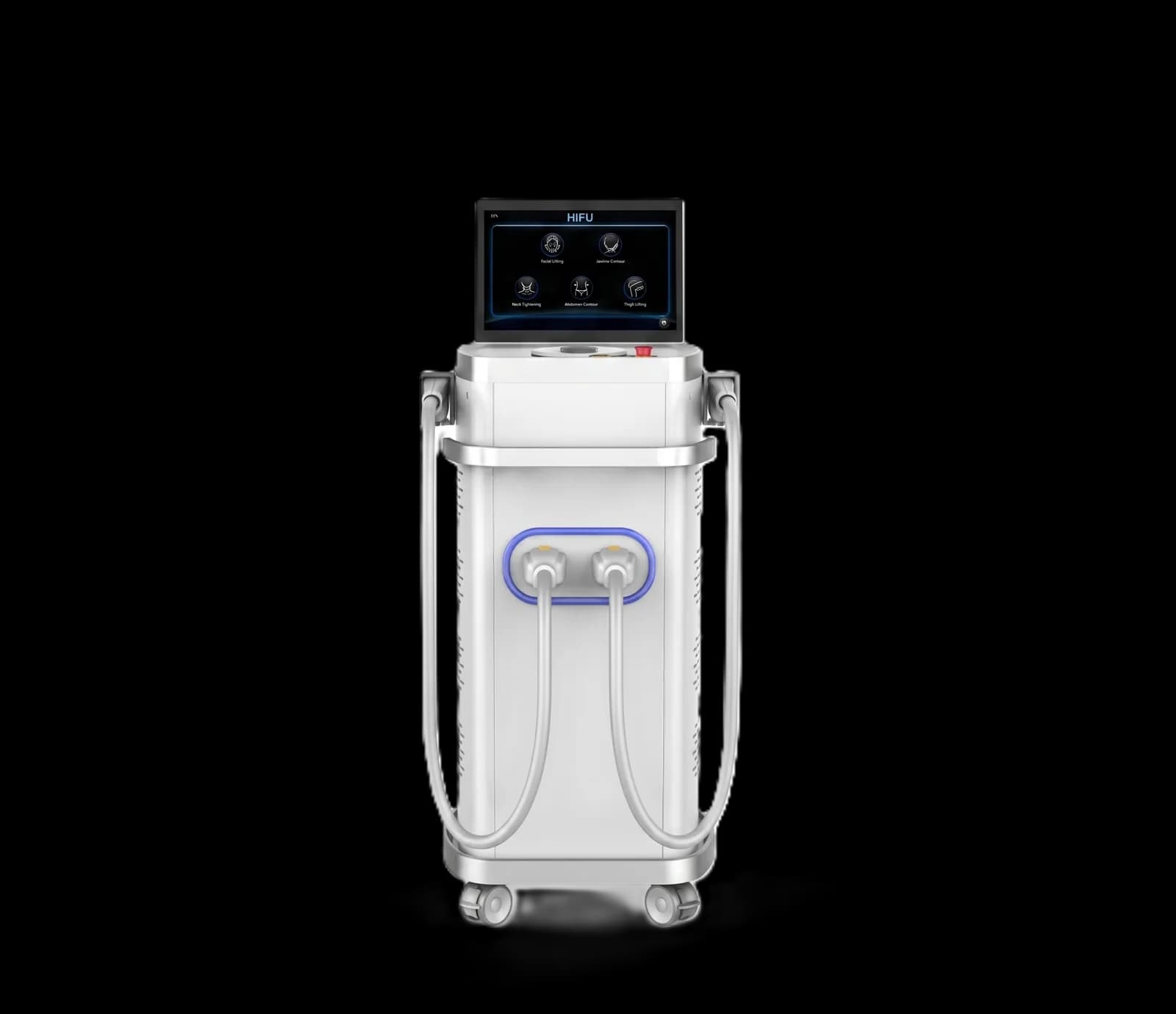
Updated: October 21, 2026
A guide for salons and clinics: how laser hair removal works, which technology suits each skin and hair type, how many sessions it takes and what to look for in a professional machine.
In short
- The laser targets the melanin in the hair. The heat reaches the follicle and stops its growth.
- Alexandrite (755 nm) works on fair skin and fine hair, diode (808 nm) covers most skin types and Nd:YAG (1064 nm) is used on dark skin.
- IPL uses broad-spectrum light and usually needs more sessions than a laser.
- A course usually has 6 to 8 sessions on the body, 4 to 10 weeks apart depending on the area.
- White, grey or very light blonde hair responds poorly, because it has little melanin.
How laser hair removal works
Laser hair removal is based on selective photothermolysis, described by Anderson and Parrish in 1983: a wavelength absorbed by a specific target in the skin heats only that target, if the pulse has the right duration. In hair removal, the target is the melanin in the hair. The absorbed light turns into heat, the heat reaches the cells that regenerate the follicle, and the hair stops growing from that follicle or grows back finer.
The epidermis also contains melanin, so cooling the skin during the pulse, with sapphire contact, cold air or gel, is part of the treatment. Power, pulse duration and cooling are set by skin type, that is by how dark the client's skin is.
The technical term used by the FDA is "permanent hair reduction": the number of hairs drops steadily after the course, and the remaining hairs are finer and lighter. One or two maintenance sessions a year keep the result.
Diode, alexandrite, Nd:YAG or IPL
The technologies differ by wavelength, which sets how deep the light goes and how strongly melanin absorbs it. The choice depends on your clients' skin types and hair.
| Technology | Wavelength | Suited to | Keep in mind |
|---|---|---|---|
| Alexandrite laser | 755 nm | Skin types I-III, fine and lighter hair | High melanin absorption, needs care on tanned skin |
| Diode laser | 808-810 nm | Skin types I-V | Balance between absorption and depth |
| Nd:YAG laser | 1064 nm | Skin types IV-VI, coarse dark hair | Goes deep and heats the epidermis little |
| Multi-wavelength diode | 755, 808, 940 and 1064 nm | All skin types, in a single pulse | For example 4D Teclaser |
| IPL and SHR | Broad filtered spectrum, usually 500 to 1200 nm | Fair skin, dark hair | More sessions; SHR mode heats gradually with repeated passes |
Skin types follow the Fitzpatrick scale, from I (very fair skin that burns easily) to VI (very dark skin). A clinic with a varied client base needs a multi-wavelength diode or a system combining alexandrite with Nd:YAG, such as Duallase Harmony.
How many laser hair removal sessions are needed
The laser acts on hairs in the active growth phase, called anagen. At any moment only part of the hairs are in this phase, so treatment is repeated as other hairs start growing. The interval between sessions follows the hair cycle of each area.
| Area | Interval between sessions | Typical number of sessions |
|---|---|---|
| Face (upper lip, chin) | 4 to 6 weeks | 6 to 10 |
| Underarms | 6 to 8 weeks | 6 to 8 |
| Bikini line | 6 to 8 weeks | 6 to 8 |
| Legs, arms, back | 8 to 10 weeks | 6 to 8 |
The figures are a guide. The real number depends on hormones, hair thickness and colour, and the technology used.
Do you run a salon, clinic or rehabilitation centre?
Tell us which treatments you want to offer and how many clients you see a day. We come back with the right model, the full price and what the delivery includes.
Client preparation and aftercare
Before the session
- No waxing, plucking or epilators for 4 weeks before. Shave the day before.
- No tanning and no self-tan for 2 to 4 weeks before.
- Clean skin, with no cream or deodorant on the treated area.
After the session
- Redness and slight swelling around the follicles, which usually settle within hours.
- SPF 50 on exposed areas.
- No sauna, swimming pool or exfoliation for 24 to 48 hours.
- Treated hairs shed within 1 to 3 weeks.
Laser hair removal contraindications
- Recently tanned skin or self-tan on the skin.
- Photosensitising medication, such as isotretinoin or some antibiotics, with a doctor's approval.
- Pregnancy.
- Infection, broken skin or active cold sores in the area.
- Tattoos in the treated area.
- Moles and suspicious pigmented lesions, which are avoided.
- Photosensitive epilepsy, with pulsed light technologies.
The practitioner does a patch test at the first visit and adjusts the settings to the skin's reaction. The client record is updated at every session.
What to look for in a laser hair removal machine
- Wavelengths that match your clients' skin types.
- Power and spot size: a large spot and high repetition rate shorten sessions on large areas, a small spot works precisely on the face.
- Sapphire contact cooling, for comfort and protection of the epidermis.
- Source lifetime, stated by the manufacturer in number of pulses, and the replacement cost.
- Handpiece weight, which matters after a full working day.
- CE marking, declaration of conformity and service after installation.
- Training with starting parameters by skin type.
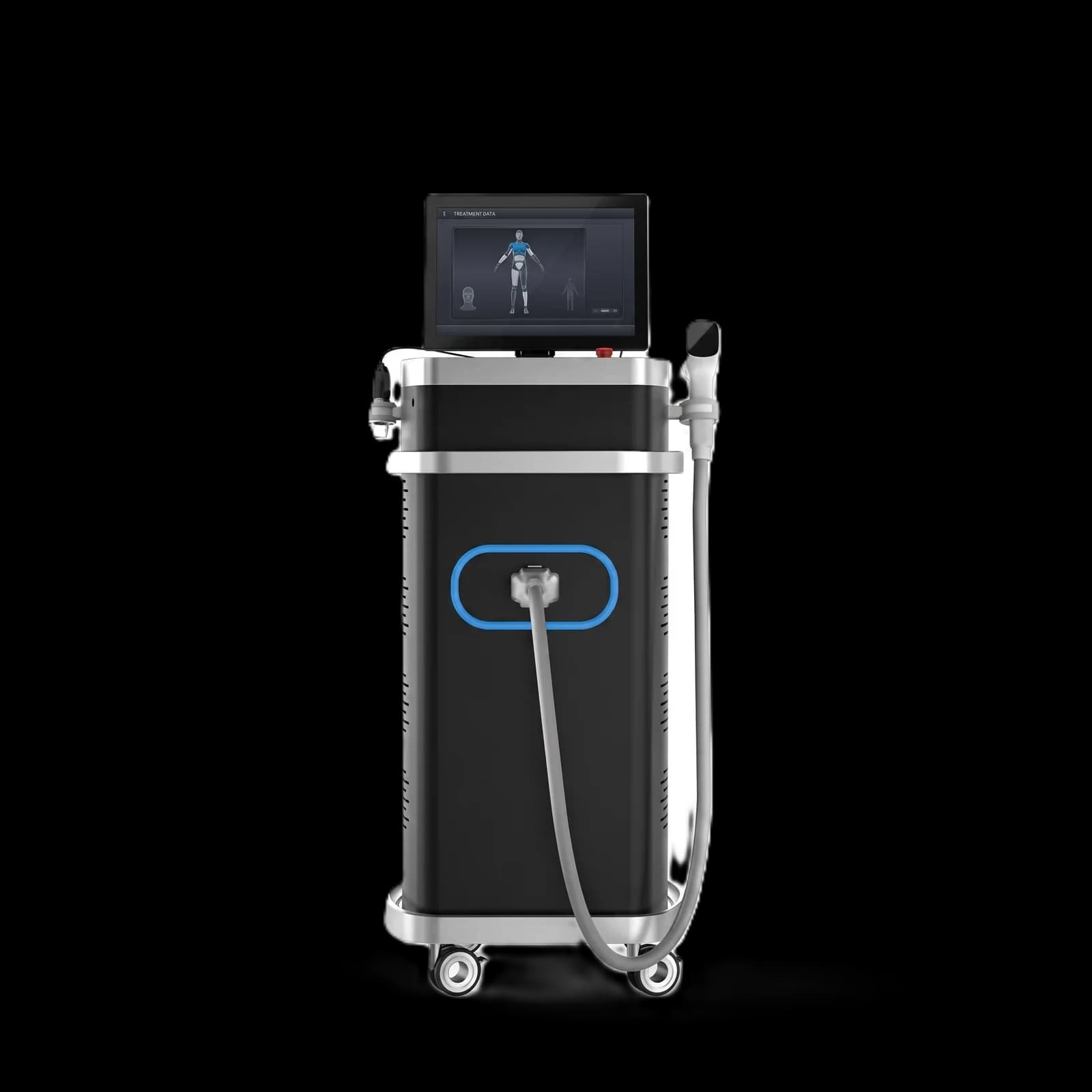
Professional diode laser hair removal system that emits four wavelengths at the same time: 755, 808, 940 and 1064 nm. Output of 1600 W, sapphire contact cooling and coverage of all six Fitzpatrick phototypes, including fine or light hair.
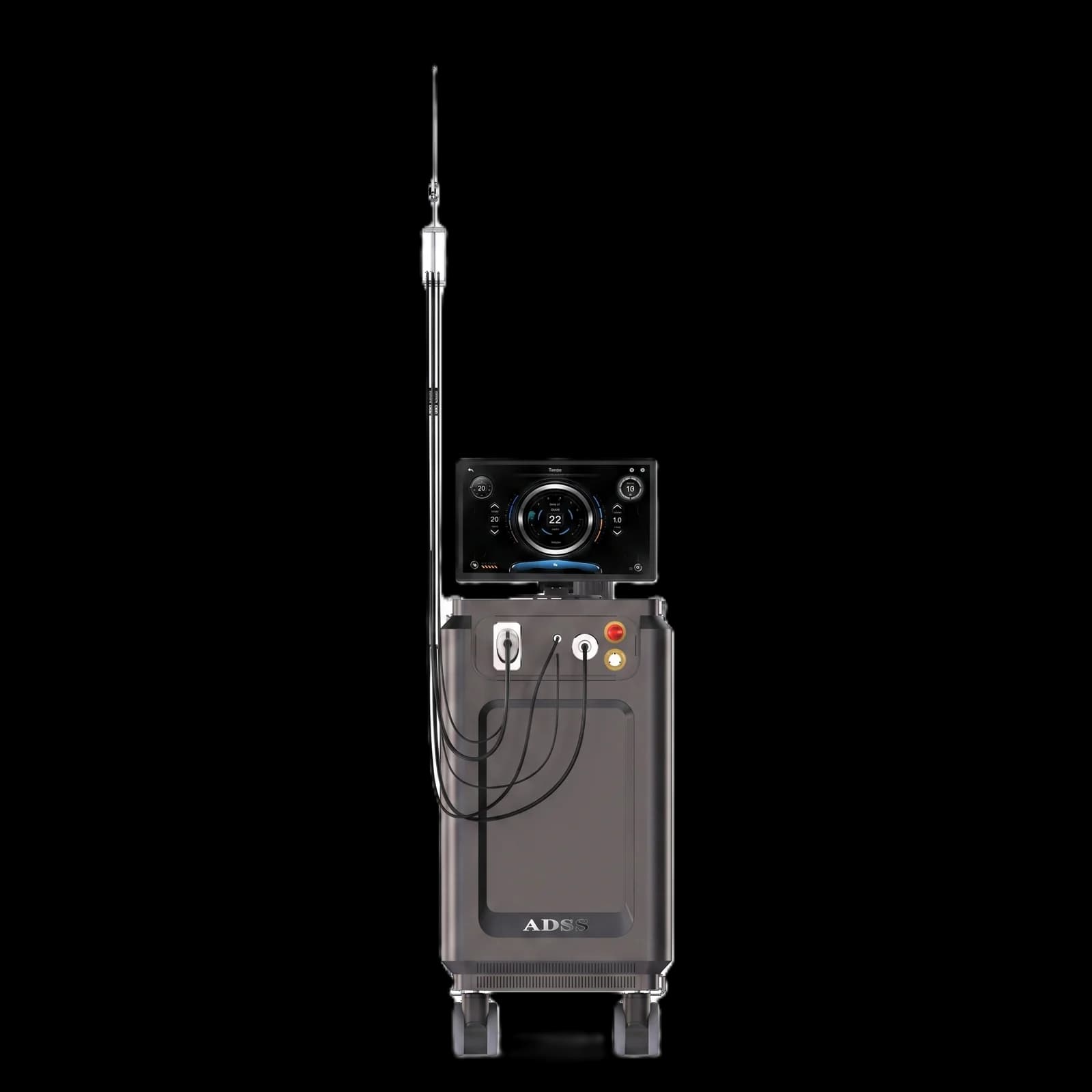
Alexandrite 755 nm and Nd:YAG 1064 nm long pulse lasers on the same system. The alexandrite covers fine hair and superficial pigmentation, the Nd:YAG covers thick hair, deep vessels and dark phototypes. Pulse width adjustable between 0.25 and 100 ms, spot sizes up to 15 mm.
4D Teclaser emits 755, 808, 940 and 1064 nm in the same pulse, with 1600 W and triple cooling through a sapphire tip. Duallase Harmony combines a 755 nm alexandrite with a 1064 nm Nd:YAG, with pulse duration adjustable from 0.25 to 100 ms. For clinics working with pulsed light, Dynamic Pulse Light SHR has an in-motion mode at 10 Hz.
Laser hair removal in your clinic: the numbers
Laser hair removal brings repeat clients: a full course and then maintenance sessions. The business case rests on time per area, the price per area in your town and the running cost of the machine: power, gel and source wear.
A machine with a large spot and high repetition rate treats full legs faster than one with a small spot, so more appointments fit into the same day. For clinics with many bookings on large areas, machine speed carries the most weight in the calculation.
In the same clinic the laser pairs with microneedling and HIFU, for clients who also book facial treatments. All hair removal models are on the laser hair removal machines page.
The Zeqira quote lists the machine, delivery, installation, training by skin type and the consumable cost per session.
Do you run a salon, clinic or rehabilitation centre?
Tell us which treatments you want to offer and how many clients you see a day. We come back with the right model, the full price and what the delivery includes.
Frequently asked questions
Is laser hair removal permanent?
The technical term is permanent hair reduction: the number of hairs drops steadily after the course, and the remaining hairs are finer. One or two maintenance sessions a year usually keep the result.
Which is better: diode or alexandrite laser?
It depends on skin type. The 755 nm alexandrite works on fair skin and fine hair. The 808 nm diode covers most skin types. Dark skin is treated with the 1064 nm Nd:YAG. Multi-wavelength machines combine them in a single pulse.
How many laser hair removal sessions are needed?
Usually 6 to 8 sessions on the body and 6 to 10 on the face, 4 to 10 weeks apart depending on the area.
Does laser hair removal work on blonde or white hair?
White, grey and very light blonde hair has little melanin and responds poorly to laser. On dark blonde and red hair the result varies from client to client, and alexandrite has the highest absorption.
Is IPL the same as laser hair removal?
IPL uses broad-spectrum pulsed light, while a laser emits a single wavelength. IPL suits fair skin with dark hair and usually needs more sessions. SHR systems heat the follicle gradually through repeated passes.
What are the contraindications for laser hair removal?
A recent tan, self-tan, photosensitising medication, pregnancy, infection or broken skin in the area and tattoos in the treated area.
How much does a professional laser hair removal machine cost?
The price depends on the wavelengths, power, spot size and source lifetime. We send the full price for the model that fits your clients, with delivery, installation and training.
Get a quote for the right machine
The quote covers the machine, delivery, installation, protocol training and the consumable cost per session. We work with companies, salons, clinics and hospitals.